Event details
Date and time: Monday 29 June 2026, 4:00pm to 7:30pm. Location: Royal Society of Medicine. Organised by Oxford Immune Algorithmics Ltd.
Register for the symposium on rsm.ac.uk
About the symposium
Blood testing is one of medicine's oldest tools and it's about to be transformed as advances in artificial intelligence, rapid diagnostics and biomedical data science create new prevention and early detection opportunities.
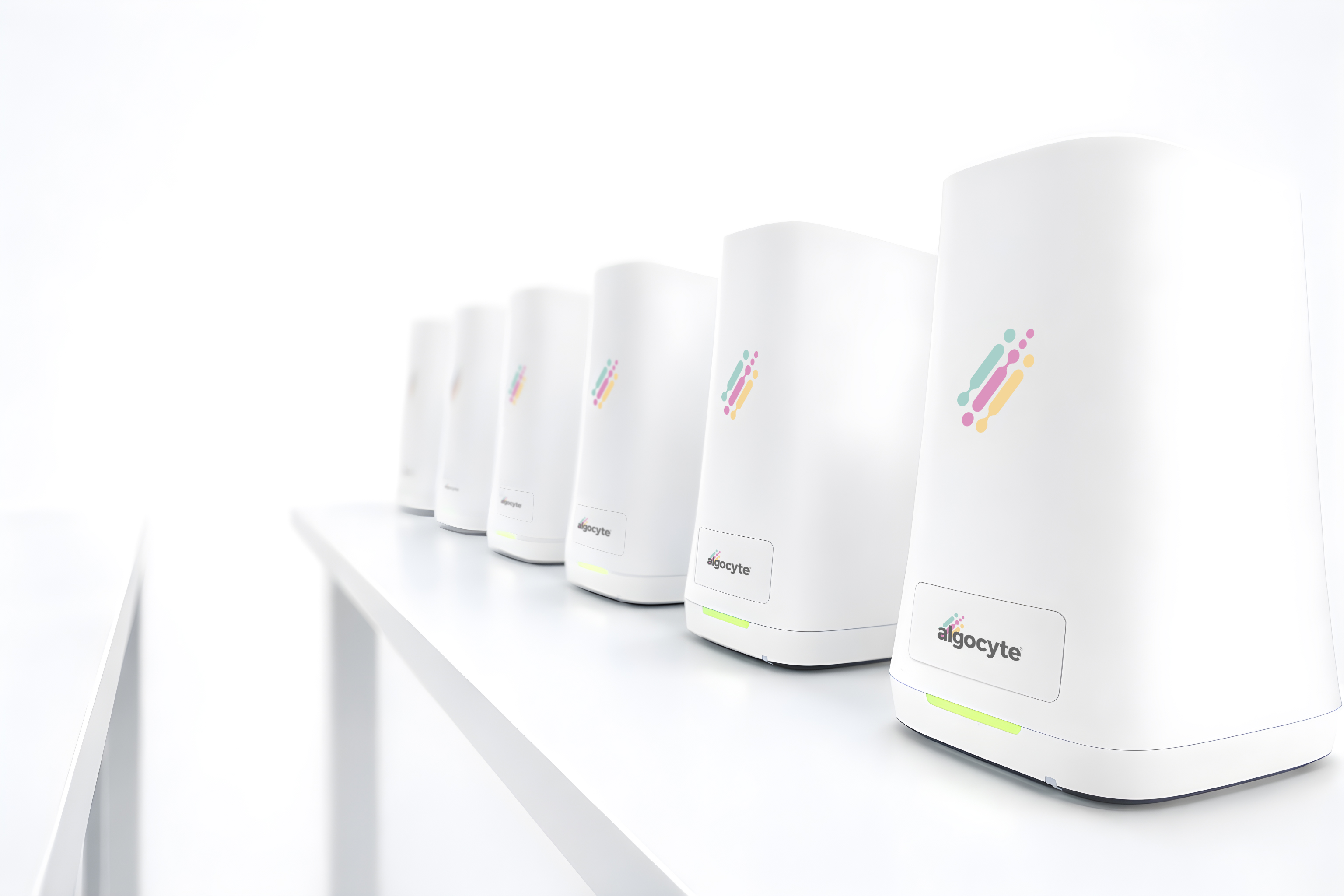
This hybrid event brings together leading researchers, clinicians and innovators for the official launch of Algocyte's new medical instrument, Proxima, a next-generation haematological analyser developed from research at Oxford, King's College London and Cambridge. Combining rapid blood analysis, AI-driven insights and longitudinal monitoring in a single platform, Proxima represents a concrete step from algorithmic medicine theory into clinical practice.
Why attend
Be among the first to see Proxima demonstrated live and understand what AI-driven longitudinal blood monitoring looks like in practice. Hear from leading experts at the intersection of AI, diagnostics and preventative medicine, including Dr Hector Zenil FRSM (Associate Professor in Healthcare Engineering, King's College London and Founder of Algocyte), Professor Kourosh Saeb-Parsy FRCS (Professor of Transplantation, University of Cambridge and CMO of Algocyte) and Professor Jesper Tegner (Professor of Bioscience, KAUST and Director of Algocyte). Explore how algorithmic diagnostics can be integrated into clinical environments and what obstacles remain. Connect with professionals across healthcare, diagnostics, biotechnology and digital health at a genuinely cross-sector event.
Aims of the event
To provide participants with a clear understanding of how artificial intelligence, rapid blood diagnostics and algorithmic medicine are converging to transform preventative and personalised healthcare; to enable attendees to explore the scientific, technological and clinical foundations of AI-driven longitudinal health monitoring and early detection; and to support participants in evaluating the opportunities, challenges and future impact of AI-enabled diagnostic systems in modern healthcare.
Learning outcomes
By attending, participants will be able to analyse the role of artificial intelligence and algorithmic medicine in the future of preventative and personalised healthcare; evaluate how rapid blood diagnostics and longitudinal biological monitoring can support earlier detection and continuous health assessment; and identify the opportunities, limitations and implementation challenges associated with integrating AI-driven diagnostic systems into clinical and healthcare environments.
Who should attend
The event is designed for professionals working across haematology, oncology and clinical decision-making, and is equally relevant to those in biotechnology, digital health, diagnostics, public health, pharmaceuticals and preventative medicine, as well as policymakers, investors and entrepreneurs with an interest in the future of healthcare technology.